Hernia Diagnosis and Treatment in Singapore
Insurance
Our surgery is on the panel of most of the major insurance companies and if you are covered by corporate insurance, you may be entitled to a cashless visit to our clinic.
Get In Touch
Introduction
A hernia is one of the more common conditions treated by general and colorectal surgeons in Singapore, and it is manageable when addressed early. It happens when an internal organ or tissue, often part of the intestine, pushes through a weak spot in the surrounding muscle or abdominal wall. Many people first notice it as a soft bulge that comes and goes.
Hernias rarely heal on their own, but they may respond to specific procedures. Depending on the type and how much it affects you, care can range from monitoring and lifestyle adjustments to keyhole or open surgical repair. This page explains how hernias develop, the symptoms to watch for, the treatment options available, and what to expect before and after surgery, so you can make an informed decision about your care.
Dr Leong Quor Meng assesses each hernia individually and talks through the options that suit your condition, rather than recommending surgery as a default.
Understanding Hernia Treatment and Surgery in Singapore

A hernia occurs when pressure pushes an organ or tissue through an opening or weakness in the muscle or tissue wall that normally holds it in place. The most common sign is a visible bulge or lump in the affected area. Most hernias appear in the abdomen between the chest and hips, though some may develop in the upper thigh and groin.
There is no single treatment that fits every hernia. The right approach depends on:
- The type of hernia and where it sits in the body
- Its size and severity, and whether it is growing
- Your symptoms, including how much pain or disruption it causes day to day
- The risk of complications, such as the tissue becoming trapped
In milder cases, where the hernia is small and not causing problems, non-surgical measures can help keep you comfortable while it is monitored. Larger or painful hernias, or those at higher risk of complications, usually need surgical repair. During your consultation, the doctor will explain which category your hernia falls into and why a particular approach is recommended.
Causes and Risk Factors of Hernia in Singapore
Understanding what makes a hernia more likely can help you notice changes in your body sooner and take steps to lower your risk. A hernia generally forms when a weak area in the abdominal wall meets increased pressure from inside the abdomen. That weakness can be present from birth or develop over time.
Several everyday factors raise the internal pressure that pushes tissue through a weak spot:
- Heavy lifting: Straining the abdominal muscles when lifting weights, furniture, or even young children can bring on a hernia or make an existing one worse, especially without proper lifting technique.
- Chronic cough: Persistent coughing, often linked to smoking or long-term lung conditions, places repeated strain on the abdominal wall.
- Obesity: Carrying extra weight adds continuous pressure on the abdominal muscles and can weaken them over time.
- Pregnancy: A growing belly stretches and weakens the abdominal wall, which is why some hernias appear during or after pregnancy.
- Constipation: Regular straining during bowel movements increases abdominal pressure and can contribute to a hernia.
Some people are also more prone to hernias because of their body structure or health history:
- Previous surgery: Earlier abdominal operations can leave weakened areas along the scar where a hernia may later form.
- Genetics: Inherited weakness in the connective tissue can make hernias more likely to run in families.
- Age: Muscle strength and elasticity naturally decline as you get older, which reduces the support around the abdomen.
- Gender: Men more commonly develop inguinal hernias, while women are more likely to develop femoral or umbilical hernias.
Having one or more of these factors does not mean you will definitely get a hernia, but it is worth knowing them, especially if you notice any new lumps or discomfort.
Symptoms of Hernia and When to Seek Urgent Care
Hernia symptoms can range from mild discomfort to severe pain. Knowing what to look out for helps you act at the right time without unnecessary worry.
A hernia often starts subtly and may not cause pain right away. Over time, you might notice:
- A visible or soft bulge in the affected area (such as the groin or abdomen) that may flatten when you lie down
- Discomfort or aching that worsens when bending, coughing, or lifting
- A feeling of heaviness, pressure, or pulling in the abdomen
- In more severe cases, nausea, vomiting, or difficulty passing stools
These symptoms usually develop gradually and can be assessed at a routine appointment. Occasionally, a hernia becomes trapped. This is called incarceration, and if the blood supply to the trapped tissue is cut off, it becomes a strangulation. Strangulation is a medical emergency and needs immediate attention. Seek urgent care straight away if you notice:
- A bulge that becomes hard, tender, or cannot be pushed back in
- Sudden, severe pain at the hernia site
- Redness, swelling, or warmth over the area
- Nausea, vomiting, or inability to pass gas or stools
For all other symptoms, it is best to see a doctor promptly rather than wait. A timely assessment confirms the diagnosis and allows treatment to begin before any complications develop. Evaluation usually involves a physical examination, imaging if needed, and a discussion of whether surgery is appropriate for your situation and lifestyle.
Types of Hernia in Singapore
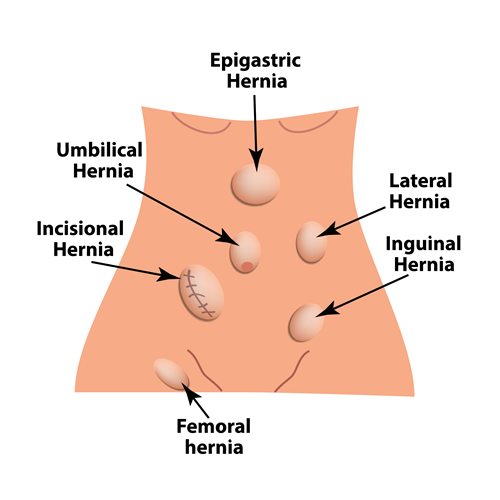
There are several types of hernias, each affecting a different part of the body. Knowing which one you have helps explain your symptoms and guide treatment.
Inguinal Hernias
An inguinal hernia happens when fatty tissue or part of the bowel pushes through the groin, just above the inner thigh. It is the most common type and mainly affects men, and it is often associated with ageing and repeated strain on the abdomen. Inguinal hernias are either direct or indirect. Direct hernias tend to cause fewer complications, while indirect hernias carry a higher risk of involving the bowel.
Femoral Hernias
A femoral hernia also appears in the groin, above the inner thigh, and is sometimes mistaken for an inguinal hernia. It is less common and affects more women than men. Because femoral hernias carry a higher risk of bowel complications, surgery is usually recommended.
Umbilical Hernias
An umbilical hernia forms when tissue or part of the bowel pushes through the abdomen near the belly button. In adults, it is often associated with previous abdominal surgery, pregnancy, or being overweight.
Epigastric Hernia
An epigastric hernia develops when fatty tissue pushes through a weak spot in the upper abdomen, between the chest and the belly button. You may notice a small lump that becomes more noticeable when you laugh or cough, and it can feel tender even when it is small.
Incisional Hernia
An incisional hernia occurs when tissue pushes through the scar of a previous abdominal operation. The healed incision line is naturally weaker, so a bulge can form there, often becoming more noticeable after physical activity. Left untreated, it can gradually enlarge.
Hiatal Hernia
A hiatal hernia is different from the others, as it happens internally when part of the stomach moves up through the diaphragm into the chest. Rather than a visible bulge, it tends to cause heartburn, acid reflux, bloating, or difficulty swallowing. Smaller hiatal hernias often respond to medication and dietary changes, while larger ones may need surgery.
Bilateral Inguinal Hernia
A bilateral inguinal hernia affects both sides of the groin at once, with tissue pushing through weak spots on each side. You may feel a dull ache, heaviness, or bulges on both sides that become more obvious when standing or lifting.
How Our Specialist In Singapore Assess Hernias
Assessment usually begins with an examination of the lump. An ultrasound scan may be needed to confirm the diagnosis or assess the extent of the problem.
Several factors guide whether surgery is appropriate:
- The type of hernia: Some types of hernia (Femoral Hernia) are more likely to become strangulated or cause a bowel obstruction.
- The content of the hernia: If the hernia contains a part of your bowel or other tissue, there may be a risk of strangulation or obstruction.
- Your symptoms and their impact: Surgery may be recommended if your symptoms are severe, getting worse, or affecting your quality of life.
- Your general health: If your overall health makes an operation riskier, the benefits and risks are discussed carefully before any decision is made.
After the assessment, the doctor will explain the findings and advise whether a repair is necessary.
Types of Hernia Surgery in Singapore
There are two main ways to repair a hernia: open surgery and laparoscopic (keyhole) surgery. The choice depends on the type and size of the hernia, the risk of recurrence, whether both sides are affected, and your suitability for each approach.
Open Hernia Surgery
Open hernia surgery is the traditional approach. The surgeon makes a single, larger incision over the hernia, giving direct access to the affected tissue and surrounding muscle. The protruding tissue is returned to its proper position, and the weakened muscle wall is repaired, often with a mesh, to reduce the chance of recurrence. Recovery generally involves a few weeks of rest and limited activity while the area heals.
Open surgery is sometimes the more suitable choice for larger or more complex hernias, or where a previous operation makes keyhole access difficult.
Laparoscopic Surgery
Laparoscopic hernia repair is a minimally invasive technique carried out through several small incisions rather than a large one. The surgeon inserts a laparoscope, a thin tube fitted with a light and a high-definition camera, which shows a magnified view of the area on a monitor. Specialised instruments are then passed through the other small incisions to complete the repair.
Because the incisions are small, keyhole surgery is generally associated with smaller scars, less post-operative discomfort for many patients, and a shorter recovery for suitable cases. It can be a good option for hernias on both sides of the groin, as both can often be addressed in a single procedure.
Benefits of Early Hernia Treatment
Treating a hernia at an earlier stage is generally associated with more straightforward management than treating one that has been left to grow or has developed complications. While a hernia is still small and uncomplicated, repair tends to be simpler, and minimally invasive approaches are often more feasible. Laparoscopic techniques typically involve smaller incisions and a shorter recovery than open surgery, and these options may be more readily available when a hernia is addressed before it enlarges.
Early treatment may also reduce the likelihood of complications. A hernia that is left untreated can gradually enlarge, and in some cases the tissue inside it becomes trapped or has its blood supply cut off, which is the situation that requires emergency surgery. Addressing a hernia as a planned procedure, rather than as an emergency, generally allows for a calmer, scheduled experience and a more predictable recovery. Earlier treatment can also mean living with less day-to-day discomfort, as hernias that are left to grow often cause more aching and disruption to normal activity.
Non-Surgical Management Options for Hernias
Not every hernia needs an operation straight away. When a hernia is small, painless, and not interfering with daily life, your doctor may suggest a period of observation. This involves regular check-ups to monitor any change in size or symptoms, and it is generally suitable when the hernia can be easily pushed back in and there are no signs of obstruction or strangulation. If anything changes, such as new pain, swelling, or digestive problems, seek medical advice promptly, as the plan may need to be revisited.
Alongside monitoring, a few practical measures can improve your comfort. For mild hernias, support garments such as abdominal binders can ease discomfort by providing gentle, even pressure over the area. These should only be used under a doctor’s guidance.
Simple lifestyle changes can also help manage symptoms and reduce pressure on the abdominal wall:
- Maintain a healthy weight to ease the load on your abdominal muscles.
- Avoid heavy lifting, or learn and use safe lifting techniques.
- Treat a chronic cough or constipation early to avoid repeated straining.
- Eat smaller, balanced meals, which can be particularly helpful for hiatal hernias.
These measures manage symptoms rather than repair the hernia itself. If your hernia grows or becomes more troublesome, the doctor may revisit whether surgery is the better long-term option.
Hernia Surgery Cost in Singapore
The cost of hernia surgery in Singapore is not a single fixed figure, because several elements contribute to the total. Knowing what goes into it helps you plan and ask the right questions at your consultation. Factors that commonly affect the cost include:
- The type and complexity of the hernia: A straightforward single hernia is generally more affordable to treat than a large, recurrent, or bilateral one.
- The surgical technique: Open and laparoscopic repairs use different equipment and theatre time, which can affect the overall cost.
- Whether a surgical mesh is used: Many repairs involve a mesh to strengthen the area, and the type used can influence the cost.
- Hospital stay and ward type: Whether your procedure is done as day surgery or requires an overnight stay, and the ward class you choose, both play a part.
- Pre-operative investigations: Consultations, ultrasound scans, blood tests, and anaesthetic assessments add to the total.
- Insurance and subsidies: MediSave, Integrated Shield Plans, and corporate or personal insurance can cover a significant portion of eligible costs, which affects your final out-of-pocket amount.
The clinic will provide a clear breakdown for your situation once the doctor has assessed your hernia, so you know what to expect before proceeding. We are also on the panel of most major insurers, and you can find more detail on our Insurance page.
Pre- and Post Hernia Surgery Care Guidelines in Singapore
Knowing how to prepare for surgery and care for yourself afterwards supports a smoother recovery.
In the days leading up to your hernia repair in Singapore, your surgeon may advise you to:
- Adjust your diet: Eat light, balanced meals and avoid heavy or oily foods the day before your hernia surgery in Singapore. You may be asked to stop eating or drinking a few hours before your procedure.
- Review your medications: Inform your hernia surgeon about all medicines, supplements, or herbal products you take. Some blood thinners, anti-inflammatories, or diabetes medications may need to be paused or adjusted.
- Quit smoking: If you smoke, stopping beforehand can help your body heal faster and lower the risk of complications.
- Arrange support: Plan for a family member or friend to accompany you on the day of surgery and help you return home safely afterwards.
After surgery, most patients can return home the same day or within 24 hours. To recover comfortably and avoid setbacks:
- Move gently: Start walking as soon as your doctor allows, as this helps improve circulation and reduce stiffness. Avoid heavy lifting or strenuous activity until your surgeon clears you.
- Care for your wound: Keep the surgical site clean and dry. Follow the advice given on when you can shower, and watch for any redness, swelling, or unusual discharge.
- Manage discomfort: Mild soreness is normal. Take prescribed pain medication as directed and avoid self-medicating.
- Follow up regularly: Attend all scheduled post-operative reviews so your hernia surgeon in Singapore can assess healing and remove stitches if needed.
Contact your doctor promptly if you develop a fever, increasing pain, or new swelling near the incision, as these can be early signs that something needs attention.
Recovery After Hernia Surgery
Recovery from hernia surgery is usually predictable, though the timeline depends on the type of repair and your own health. As a general guide, many patients recover from keyhole surgery within about two to three weeks, while open surgery often takes around four to six weeks for a full return to normal activity. The doctor will give you guidance tailored to your procedure.
- Returning to work: If your job is desk-based or light, you may feel ready to return within one to two weeks. Roles involving heavy lifting or physical exertion usually require a longer break, and your surgeon will advise when it is safe.
- Exercise and physical activity: Light walking is encouraged early on, as it supports healing. More strenuous exercise, lifting, and core workouts should be reintroduced gradually and only once your surgeon confirms the repair has settled, which helps protect against recurrence.
- Managing discomfort: Some soreness and tightness around the repair site is normal and tends to ease over the first couple of weeks. Prescribed pain relief, gentle movement, and adequate rest usually keep this manageable.
- Resuming daily activities: Most everyday tasks, such as light housework, driving once you can do so comfortably and safely, and gentle routines, can be resumed within days to a couple of weeks. Listen to your body, avoid pushing through pain, and check with your surgeon if you are unsure about a particular activity.
If your recovery does not feel right, for example with worsening pain, swelling, or signs of infection, get in touch rather than wait for your next scheduled review.
When to See a Hernia Specialist in Singapore
It can be hard to know when a lump or ache is worth getting checked. As a rule, it is worth seeing a hernia specialist if you notice any of the following, even if the symptoms seem mild at first:
- A new or persistent lump or bulge in the groin, abdomen, or near a previous surgical scar
- Discomfort, aching, or a dragging sensation that worsens when you stand, cough, or lift
- A bulge that is getting larger over time or becoming more noticeable
- Digestive symptoms such as ongoing heartburn, reflux, or difficulty swallowing, which can point to a hiatal hernia
- Any lump that was previously soft and now feels firm, tender, or cannot be pushed back in
The last point deserves particular attention. A hernia that suddenly becomes hard and painful, especially alongside nausea, vomiting, or an inability to pass gas or stools, may be trapped or strangulated and needs urgent medical care.
Seeing a specialist early does not always mean surgery. Often it simply means a clear diagnosis and reassurance, along with a plan that suits your condition. An early assessment also gives you more options, as smaller hernias are generally more straightforward to manage.
Why Choose Advanced Colorectal and General Surgery
Advanced Colorectal and General Surgery is a private specialist clinic at Mount Alvernia Hospital, built around the practice of one surgeon, Dr Leong Quor Meng. From your first consultation through to surgery and follow-up, you are seen by the same specialist, covering:
- Assessment and diagnosis of the common hernia types, including inguinal, femoral, umbilical, incisional, and hiatal hernias.
- Open and laparoscopic (keyhole) hernia repair, including Single Incision Laparoscopic surgery where clinically suitable.
- Management of complex and recurrent hernias, alongside straightforward single repairs.
- Minimally invasive general surgery and diagnostic endoscopy, supported by experience across more than 10,000 procedures.
Treatment plans are developed individually around your type of hernia, your symptoms, and your overall health, with a clear explanation of the options and the reasoning behind the recommended approach.
About Dr Leong Quor Meng
Colorectal & Hernia Surgeon in Singapore
Dr Leong is a general and colorectal surgeon in Singapore who graduated from the University of London in 2000. He obtained his membership to the Royal College of Surgeons of Edinburgh in 2003 and joined Tan Tock Seng Hospital that same year. He started his Advanced Specialist Training in 2005 and passed his fellowship exams in 2008. In 2010, he was awarded the MOH HMDP scholarship to train in laparoscopic and robotic colorectal surgery under Prof Kim Seon Hahn at Korea University.
Dr Leong is among the surgeons in Singapore who perform Single Incision Laparoscopic surgery, a technically demanding minimally invasive procedure that uses a single small incision. He also routinely trains basic and advanced specialist trainees in laparoscopic surgery and proctors consultant surgeons in complex colorectal cases.
Beyond laparoscopic surgery, Dr Leong performs a wide range of minimally invasive general surgery procedures. As an experienced endoscopist with more than 10,000 procedures, he carries out diagnostic and therapeutic scopes for both planned and emergency conditions. He performs direct access colonoscopies and oesophago-gastro-duodenoscopy, and provides colonoscopy screening in Singapore on the same day where possible for his patients’ convenience.

Frequently Asked Questions About Hernia Surgery
How do I prepare for hernia surgery?
To prepare for hernia surgery in Singapore, follow your surgeon’s pre-operative instructions, which may include fasting, avoiding certain medications, and arranging for a friend or family member to care for you after the procedure. You should also inform your doctor about any medical conditions or allergies you have.
What is the recovery time for hernia surgery?
Recovery for open hernia surgery in Singapore typically takes about four to six weeks, while laparoscopic surgery may allow for a quicker recovery of around two to three weeks. Your surgeon will provide the proper guidelines for your recovery.
What factors affect hernia surgery costs in Singapore?
Several factors influence the cost, including the type and complexity of the hernia, whether open or keyhole surgery is used, whether a mesh is needed, your hospital stay and ward type, and any pre-operative investigations. Insurance, MediSave, and Integrated Shield Plans can also reduce your out-of-pocket cost. The medical team will provide a clear estimate for your situation at consultation.
Is hernia surgery covered by insurance?
Many health insurance plans in Singapore cover hernia surgery costs, but coverage details can vary. Do check with your insurance provider to understand the coverage extent, co-payments, and pre-authorisation requirements.
What causes a hernia?
A hernia happens when an internal body part pushes through a weak part in the surrounding muscle or tissue. Common causes of hernia in Singapore include heavy lifting, chronic coughing, obesity, pregnancy, and previous abdominal surgeries.
What happens during a hernia consultation?
During a consultation, the hernia specialist will review your medical history and examine the affected area. If necessary, they may arrange for imaging such as an ultrasound. The hernia specialist will then explain the type of hernia you may have and recommend the most appropriate treatment options.
How is a hernia diagnosed?
A hernia is usually diagnosed through a physical examination, during which the doctor feels for a bulge in the affected area. Imaging tests such as an ultrasound, CT scan, or MRI may be used to confirm the diagnosis and assess how extensive the hernia is.
What is the difference between open and laparoscopic hernia repair?
Open repair uses a single larger incision to access and repair the hernia. Laparoscopic, or keyhole, repair uses several small incisions and a laparoscope to guide the repair. Keyhole surgery is generally associated with smaller scars and a shorter recovery for suitable patients.
How do I know if my hernia requires surgery?
Surgery may be recommended if your hernia causes persistent pain or discomfort, is growing in size, or carries a risk of complications such as incarceration or strangulation. The doctor will assess your condition and advise whether surgery is necessary.
When should I seek urgent treatment for a hernia?
Seek urgent care if your hernia suddenly becomes hard, very painful, or cannot be pushed back in, particularly if this is accompanied by nausea, vomiting, or an inability to pass gas or stools. These can be signs that the hernia is trapped or strangulated and needs immediate attention.
Insurance
Our surgery is on the panel of most of the major insurance companies and if you are covered by corporate insurance, you may be entitled to a cashless visit to our clinic.
Get In Touch
Corporate Insurance Partners


Personal Insurance Partners