Hernia Diagnosis and Treatment in Singapore
Insurance
Our surgery is on the panel of most of the major insurance companies and if you are covered by corporate insurance, you may be entitled to a cashless visit to our clinic.
Get In Touch
Table of Contents
Introduction
Usually developed between the chest and pelvis, a hernia can be painful and uncomfortable to live with. However, it can be treated with hernia surgery in Singapore if detected early.
Dr QM Leong performs several advanced hernia surgeries that are proven to be highly effective. Find out more on this page about hernia surgery costs in Singapore and the procedures for hernia surgery.
Understanding Hernia Treatment and Surgery in Singapore
What is a Hernia?

A hernia occurs when an organ, such as a part of your intestine, pushes through an opening in the muscle or tissue (abdominal wall) that holds it in place. The most common symptom of a hernia is the observation or appearance of a bulge or lump in the affected area.
Most hernias occur in the abdominal area between the chest and hips, while some hernias can also appear in the upper thigh and groin areas.
In Singapore, hernia treatment options vary depending on the type, size, and severity of the hernia, as well as the patient’s overall health.
In mild cases, non-surgical hernia treatments can help manage symptoms. However, large and painful hernias may require surgical repair.
Causes and Risk Factors of Hernia in Singapore
There are several causes and risk factors when it comes to hernias. Being aware of what makes hernias more likely can help you recognise changes in your body sooner and prevent complications.
Hernia Common Causes
A hernia usually develops when there’s a weakness in your abdominal wall, and pressure pushes an organ or tissue through it.
Several factors can increase that internal pressure, making it easier for a hernia to form, such as:
- Heavy lifting: Straining the abdominal muscles while lifting weights, furniture, or even children can cause or worsen a hernia.
- Chronic cough: Continuous coughing — especially from smoking or lung issues — puts constant pressure on the abdominal wall.
- Obesity: Extra body weight adds strain on abdominal muscles, making them more likely to tear
- Pregnancy: The expanding belly stretches and weakens the abdominal wall over time
- Constipation: Regular straining during bowel movements increases abdominal pressure, which can lead to discomfort and other issues.
Hernia Risk Factors
Some people in Singapore are naturally more prone to developing a hernia due to their body’s structure or health history. These include:
- Previous surgery: Past abdominal operations can leave weak spots where hernias may form.
- Genetics: Inherited connective tissue weaknesses can increase the likelihood of hernias.
- Age: Muscle strength and elasticity decrease as you get older, reducing natural support around the abdomen.
- Gender: Men tend to experience inguinal hernias more often, while women may develop femoral or umbilical hernias.
Symptoms of Hernia and When to Seek Urgent Care
Hernia symptoms can range from mild discomfort to severe pain. Knowing what to look out for — and when to seek urgent care — can help you prevent serious complications.
Common Symptoms of a Hernia
A hernia often starts subtly and may not cause pain right away. Over time, you might notice:
- A visible or soft bulge in the affected area (such as the groin or abdomen)
- Discomfort or aching that worsens when bending, coughing, or lifting
- A feeling of heaviness, pressure, or pulling in the abdomen
- Occasionally, nausea, vomiting, or difficulty passing stools may occur in more severe cases
Warning Signs of Incarceration or Strangulation
An incarceration or strangulation happens when a section of tissue becomes trapped within the hernia, cutting off its blood supply. You may notice:
- A bulge that becomes hard, tender, or cannot be pushed back in
- Sudden, severe pain at the hernia site
- Redness, swelling, or warmth over the area
- Nausea, vomiting, or inability to pass gas or stools
When to Call Your Doctor or Go to the Hospital
If you have any of the symptoms or warning signs of a hernia, you should visit your doctor as soon as possible.
Timely evaluation helps confirm the diagnosis so you can start treatment to prevent further complications.
In Singapore, hernia treatment options typically involve a physical examination, imaging if needed, and surgical repair when indicated. Early consultation allows a hernia specialist to recommend the safest approach for your condition and lifestyle.
Types of Hernia in Singapore
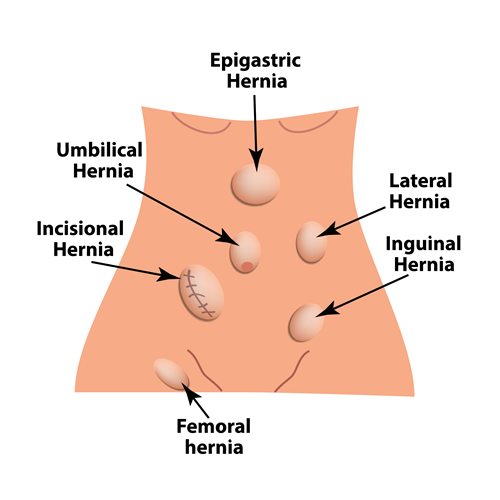
There are several types of hernias, each affecting a different area of the body:
Inguinal Hernias
Inguinal hernias occur when fatty tissue or a part of your bowel protrudes through your groin above your inner thigh.
This is the most common type of hernia, and it mainly affects men. It’s often associated with ageing and repeated strain on the tummy.
It is further classified into Direct and Indirect inguinal hernias. Direct hernias are less likely to cause complications, while indirect inguinal hernias have a higher risk of bowel complications.
Femoral Hernias
Femoral hernias also happen when fatty tissue or part of your bowel pokes through into your groin above your inner thigh. It is often mistaken for an inguinal hernia.
This type of hernias are much less common than inguinal hernias and tend to affect more women than men. Femoral hernias have the highest risk of bowel complications and should always be treated with surgery.
Like inguinal hernias, femoral hernias are also associated with ageing and repeated strain on the tummy.
Umbilical Hernias
Umbilical hernias occur when fatty tissue or part of your bowel pokes through your abdomen near your belly button (umbilicus).
In adults, it is often due to previous umbilical incisions (laparoscopic surgery), pregnancy, and obesity.
Epigastric Hernia
An epigastric hernia forms when fatty tissue pushes through a weak spot in the upper abdomen, between the chest and the belly button.
You may notice a small lump that becomes more noticeable when you laugh or cough. While often small, it can cause discomfort or tenderness in the area.
Incisional Hernia
An incisional hernia develops when part of the intestine or tissue pushes through a scar from previous abdominal surgery.
The weakened area along the incision line makes it easier for a bulge to appear, especially after physical activity. Over time, it can grow larger if left untreated.
Hiatal Hernia
A hiatal hernia occurs when part of the stomach moves upward through the diaphragm into the chest cavity.
This can lead to heartburn, acid reflux, bloating, or difficulty swallowing. Smaller hernias may respond well to medication and diet changes, while larger ones may need surgical repair.
Bilateral Inguinal Hernia
A bilateral inguinal hernia affects both sides of the groin. It happens when tissue or part of the intestine pushes through weak spots in the lower abdominal wall. You might feel a dull ache, heaviness, or bulges on both sides that become more obvious when standing or lifting.
How Our Specialist In Singapore Assess Hernias
Our specialist in Singapore assessed hernias by an examination of the lump. Sometimes an ultrasound scan may be required to confirm the diagnosis or assess the extent of the problem.
A number of factors will be considered when deciding whether surgery is appropriate, including:
- The type of hernia – Some types of hernia (Femoral Hernia) are more likely to become strangulated or cause a bowel obstruction than others
- The content of your hernia – If the hernia contains a part of your bowel or other tissue, there may be a risk of strangulation or obstruction
- Your symptoms and the impact on your daily life – Hernia surgery in Singapore may be recommended if your symptoms are severe or getting worse, or if the hernia is affecting your quality of life
- Your health in general – Hernia surgery may be too much of a risk if your general health is poor
Contact us today to make an appointment. We will advise accordingly based on your condition and decide if a hernia repair procedure is necessary.
Types of Hernia Surgery in Singapore
Here are the two main ways hernia surgery is carried out in Singapore:
Open Hernia Surgery
In Singapore, open hernia surgery is a traditional approach to repairing hernias, where a single, larger incision is made in the area of the hernia. During this procedure, the hernia surgeon has direct access to the herniated tissue and the surrounding muscles.
The primary steps of open hernia surgery involve making an incision over the site of the hernia, carefully pushing the protruding tissue or organ back into its correct position within the abdomen, and then repairing the weakened muscle wall to prevent recurrence.
Recovery from open hernia surgery generally involves a few weeks of rest and limited activity to allow the body to heal properly.
Laparoscopic Surgery
Laparoscopic hernia repair surgery in Singapore is a minimally invasive technique that has become increasingly popular due to its benefits of reduced pain, quicker recovery, and smaller scars compared to traditional open surgery.
Through small incisions, the hernia surgeon inserts a laparoscope, which is a thin tube equipped with a light and a high-definition camera. The laparoscope provides a magnified view of the internal structures on a monitor, allowing the surgeon to see the hernia and surrounding tissues.
Additional specialised surgical instruments are inserted through the other incisions to perform the repair.
Non-Surgical Management Options for Hernias
Some hernias can be managed safely with practical measures rather than immediate surgery:
Watchful Waiting: When It’s Appropriate
Not all hernias require immediate surgery. In some cases, your doctor may recommend watchful waiting — especially if the hernia is small, painless, and not affecting your daily activities.
This approach involves regular check-ups to monitor any changes in size or symptoms and is suitable when the hernia can be easily pushed back in and there are no signs of obstruction or strangulation.
However, if you notice new pain, swelling, or digestive problems, seek medical advice promptly.
Support Garments and Lifestyle Modifications
For mild hernias, support garments such as abdominal binders or trusses can help reduce discomfort and provide gentle pressure over the affected area.
These should only be used under a doctor’s supervision to ensure proper fit and avoid further strain on the tissues.
Simple lifestyle changes can also make a difference:
- Maintain a healthy weight to reduce abdominal pressure.
- Avoid heavy lifting or learn safe lifting techniques.
- Treat chronic cough or constipation early to prevent straining.
- Eat smaller, balanced meals to ease digestive pressure, especially for hiatal hernias.
Pre- and Post Hernia Surgery Care Guidelines in Singapore
To recover well and prevent complications, it’s important to know how to prepare before surgery and care for yourself after.
How to Prepare for Hernia Surgery in Singapore
Preparing well for surgery helps ensure a smoother recovery. In the days leading up to your hernia repair in Singapore, your surgeon may advise you to:
- Adjust your diet: Eat light, balanced meals and avoid heavy or oily foods the day before your hernia surgery in Singapore. You may be asked to stop eating or drinking a few hours before your procedure.
- Review your medications: Inform your hernia surgeon about all medicines, supplements, or herbal products you take. Some blood thinners, anti-inflammatories, or diabetes medications may need to be paused or adjusted.
- Quit smoking: If you smoke, stopping beforehand can help your body heal faster and lower the risk of complications.
- Arrange support: Plan for a family member or friend to accompany you on the day of surgery and help you return home safely afterwards.
Post-Operative Care Tips
In Singapore, recovery time varies depending on the type of hernia repair performed. Most patients can return home the same day or within 24 hours. To recover comfortably and avoid setbacks:
- Move gently: Start walking as soon as your doctor allows — this helps improve circulation and reduce stiffness. Avoid heavy lifting or strenuous activity until your surgeon clears you.
- Care for your wound: Keep the surgical site clean and dry. Follow the instructions on when you can shower, and watch for redness, swelling, or unusual discharge.
- Manage discomfort: Mild soreness is normal. Take prescribed pain medication as directed and avoid self-medicating.
- Follow up regularly: Attend all scheduled post-operative reviews so your hernia surgeon in Singapore can assess healing and remove stitches if needed.
If you notice fever, increasing pain, or new swelling near the incision, contact your doctor promptly.
Why you should visit us for hernia surgery
Dr QM Leong is an experienced colorectal specialist with expertise in hernia repair and treatment in Singapore. With his knowledge and skills, he will accurately diagnose your condition, identifying any signs or common symptoms of a hernia. Based on his thorough evaluation, Dr Leong will determine the most appropriate medical treatment or surgical procedure for your needs.
We are fully committed to providing a pleasant experience, comprehensive hernia treatment, and quality patient care. If you have any questions about the surgical procedures or hernia surgery costs in Singapore, please make an appointment with us today.
Frequently asked questions
How do I prepare for hernia surgery?
To prepare for hernia surgery in Singapore, follow your surgeon’s pre-operative instructions, which may include fasting, avoiding certain medications, and arranging for a friend or family member to care for you after the procedure. You should also inform your doctor about any medical conditions or allergies you have.
What is the recovery time for hernia surgery?
For open hernia surgery in Singapore, recovery typically takes about four to six weeks, while laparoscopic surgery may allow for a quicker recovery of two to three weeks. Your surgeon will provide the proper guidelines for your recovery.
What is the average cost of hernia surgery?
The average cost of hernia surgery in Singapore can vary across different surgeons and hospitals. On average, the hernia surgery cost in Singapore ranges from SGD 5,000 to SGD 15,000.
Is hernia surgery cost covered by health insurance?
Many health insurance plans in Singapore cover hernia surgery cost, but coverage details can vary. Do check with your insurance provider to understand the coverage extent, co-payments, and pre-authorisation requirements.
What is a hernia, and what causes it?
A hernia happens when an internal body part pushes through a weak part of the muscle or surrounding tissue wall. Common causes of hernia in Singapore include heavy lifting, chronic coughing, obesity, pregnancy, and previous surgeries.
What should I expect during a consultation with a hernia specialist in Singapore?
During a consultation, the hernia specialist will check your medical history and do a physical examination. If necessary, they may order imaging tests. The hernia specialist will discuss your symptoms, diagnose the type of hernia, and recommend the most appropriate treatment options.
How does a hernia specialist diagnose a hernia?
In Singapore, a hernia specialist diagnoses a hernia through a combination of physical examination and imaging tests. During the physical exam, the doctor feels for a bulge in the affected area. Imaging tests like ultrasound, CT scans, or MRI can provide detailed images to confirm the diagnosis and assess the severity.
What surgical techniques does the hernia surgeon specialise in?
A hernia surgeon in Singapore typically specialises in both open and laparoscopic hernia repair techniques.
What makes a surgeon qualified to perform hernia surgery?
A qualified hernia surgeon in Singapore has extensive training and experience in general surgery, with specific expertise in hernia repair. They should be MOH-accredited and have a proven track record of successful hernia surgeries.
What is the difference between open and laparoscopic hernia repair?
In Singapore, open hernia repair involves making a single large incision to access and repair the hernia. In contrast, laparoscopic hernia repair requires several small incisions and a laparoscope to guide the repair, offering benefits such as reduced pain, quicker recovery, and smaller scars.
How long does a typical hernia repair in Singapore procedure take?
A typical hernia repair in Singapore procedure takes about one to two hours, depending on the type and complexity of the hernia and the surgical technique used.
How do I know if my hernia needs surgical treatment?
Your hernia may require surgical treatment if it causes persistent pain or discomfort, grows in size, or leads to complications such as incarceration or strangulation. Your hernia specialist in Singapore will assess your condition and recommend whether surgery is necessary.
How do I manage pain associated with a hernia?
Pain associated with a hernia can be managed with over-the-counter pain relievers, avoiding heavy lifting, wearing supportive garments, and following your doctor’s advice on lifestyle changes. If the pain persists, consult your hernia specialist in Singapore for further evaluation and treatment options.
About Dr QM Leong
Colorectal & Hernia Surgeon in Singapore
Dr Leong is a general and colorectal surgeon in Singapore who graduated from the University of London in 2000. He obtained his membership to the Royal College of Surgeons of Edinburgh in 2003 and started working in Tan Tock Seng Hospital in 2003. He started his Advanced Specialist Training in 2005 and passed his fellowship exams in 2008. Dr Leong was awarded the prestigious MOH HMDP scholarship to train under Prof Kim Seon Hahn in Korea University for Laparoscopic and Robotic colorectal surgery in 2010.
Dr Leong is amongst a handful of hernia and colorectal surgeons in Singapore who practice Single Incision Laparoscopic surgery. This is a technical and complex procedure that is minimally invasive, speeds up recovery, and confers excellent cosmetic results. Dr Leong also routinely trains basic and advanced specialist trainees in laparoscopic surgery, and regularly proctors consultant surgeons in complex colorectal cases.
Beyond laparoscopic surgery, Dr Leong also performs a repertoire of minimally invasive General Surgery procedures. He is also an experienced endoscopist with more than 10000 procedures, performing diagnostic and therapeutic scopes for elective and emergency surgical conditions. He performs direct access colonoscopies and oesophago-gastro-duodenoscopy for patients and will strive to perform the procedures on the same day if possible for patients’ convenience.

Insurance
Our surgery is on the panel of most of the major insurance companies and if you are covered by corporate insurance, you may be entitled to a cashless visit to our clinic.
Get In Touch
Corporate Insurance Partners


Personal Insurance Partners