Diverticulitis & Diverticular Disease Treatment in Singapore
Insurance
Our surgery is on the panel of most of the major insurance companies and if you are covered by corporate insurance, you may be entitled to a cashless visit to our clinic.
Get In Touch
Introduction
Diverticular disease is a common condition that affects the colon, particularly in adults over the age of 40. It begins when small pouches form along the colon wall and can progress to diverticulitis when those pouches become inflamed or infected.
While the condition ranges from entirely symptom-free to acutely painful, most cases respond well to treatment. With early diagnosis and appropriate care, serious complications are avoidable, and many patients manage their condition effectively long-term.
What Is Diverticular Disease, And What Causes It?
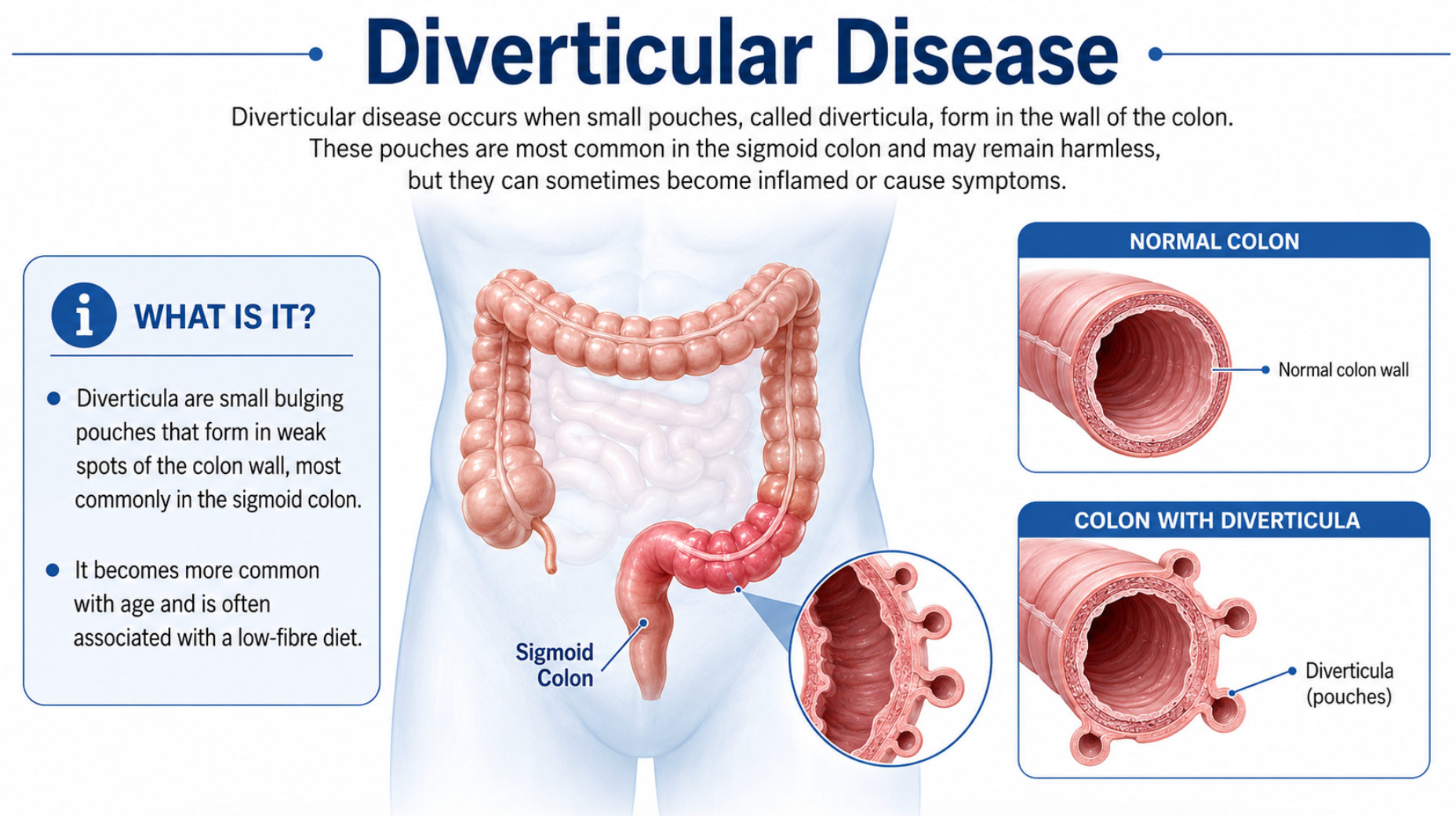
Diverticular disease is characterised by the presence of diverticula, small pouches that form in the walls of the colon. They tend to develop where the colon wall is weakest, pushed outward by sustained internal pressure over time.
Two distinct stages are worth understanding:
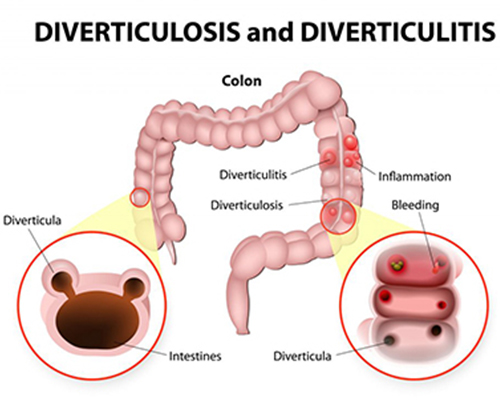
- Diverticulosis describes the presence of pouches without any inflammation or infection. It is often asymptomatic and discovered incidentally during routine screening.
- Diverticulitis occurs when one or more of those pouches become inflamed or infected, producing symptoms that require medical attention.
The precise causes are not entirely understood, but age-related changes to the colon wall combined with increased internal pressure over time are considered the primary drivers.
What Are The Common Symptoms Of Diverticular Disease In Singapore?
Generally, diverticula exhibit no symptoms and require no treatment. Many people only discover the condition during a colonoscopy or CT scan performed for unrelated reasons.
When diverticulosis does cause discomfort, the symptoms tend to be mild, such as occasional cramping, bloating or minor changes in bowel habits that are easy to overlook.
Diverticulitis presents more clearly. The most common symptom is abdominal pain, typically on the lower left side, which can be sharp and persistent. Other symptoms include fever of 38°C or above, nausea, vomiting, diarrhoea or constipation, loss of appetite, and bloating. In more severe cases, diverticulitis can lead to rectal bleeding, which may present as bright red or maroon-coloured blood in the stool. Any episode of rectal bleeding warrants prompt medical review.
Risk Factors for Diverticular Disease
Several factors raise the likelihood of developing this condition:
- Age: The condition affects up to 50% of people over the age of 60 and becomes more prevalent with each passing decade.
- Low-fibre diet: Hard stools and straining place sustained pressure on the colon wall over time.
- Obesity: Places additional mechanical and physiological stress on the digestive system.
- Smoking: Associated with increased inflammation and slower tissue healing.
- Sedentary lifestyle: Contributes to constipation and reduced bowel motility.
- Genetics: The condition tends to run in families, suggesting an inherited predisposition.
Addressing modifiable risk factors early may meaningfully reduce the likelihood of diverticula forming or diverticulitis developing.
Complications Of Diverticulitis
When diverticulitis is left untreated or does not respond adequately to initial management, it can progress beyond pain and fever. Potential complications include:
- Abscess: A pocket of pus collecting within or around an inflamed diverticulum, often requiring drainage before further treatment.
- Fistula: An abnormal channel that forms between the bowel and a nearby organ, such as the bladder or vagina.
- Stenosis: Scarring from repeated inflammation that progressively narrows the bowel, potentially leading to obstruction.
- Peritonitis: A severe complication that occurs when a perforated diverticulum leaks bowel contents into the abdominal cavity. Peritonitis requires immediate medical attention and surgical intervention.
Prompt treatment significantly reduces the risk of these more serious outcomes.
Benefits of Early Diverticulitis Treatment
Catching diverticulitis early, before complications develop, substantially changes the treatment trajectory. Mild episodes managed promptly can often be handled on an outpatient basis with antibiotics and dietary adjustments.
For patients with recurring episodes, early specialist review also allows for proactive planning, including a structured discussion about whether elective surgery will provide a better long-term outcome than repeated acute management.
Treatments For Diverticular Disease In Singapore
Treatment depends on the severity of the condition.For diverticulosis, the focus is on prevention. Increasing dietary fibre intake is key to softening the stool and preventing constipation, which reduces pressure within the colon. Adequate hydration and regular physical activity reinforce this foundation.
For diverticulitis, treatment is guided by severity:
- Mild cases are typically managed with oral antibiotics, a temporary clear liquid or low-residue diet to rest the bowel, and pain relief as needed.
- Moderate to severe cases may require hospitalisation with intravenous antibiotics and closer clinical monitoring. Where an abscess has formed, drainage is often performed by a radiologist before any further surgical planning proceeds.
Recurrent diverticulitis warrants a thorough specialist review to assess whether ongoing medical management remains appropriate or whether surgical intervention would be a better choice.
Diverticulitis Surgery in Singapore
Surgery is considered when:
- Diverticulitis recurs frequently
- When complications such as fistulas, bowel obstruction or peritonitis are present
- When non-surgical treatments have not produced adequate results
The most common procedure is a colectomy, which involves removing the affected section of the large intestine. Where possible, this is performed laparoscopically, using small incisions rather than a large open cut. A minimally invasive approach typically reduces recovery time, post-operative discomfort and visible scarring.
Recovery & Lifestyle Changes After Diverticulitis Treatment
Recovery from a diverticulitis episode, whether managed medically or surgically, is a gradual process. In the short term, a low-fibre or liquid diet allows the bowel to settle before solid foods are reintroduced progressively.
For long-term recurrence prevention, the most effective steps include maintaining a high-fibre diet, staying well-hydrated, exercising regularly, managing weight and avoiding smoking. Patients who have undergone surgery will be guided through a structured recovery plan with dietary milestones and follow-up consultations.
How Is Diverticular Disease Diagnosed?
Diagnosis begins with a thorough clinical consultation. Your healthcare provider will take a detailed medical history, including information about your symptoms, their duration and any previous episodes. A physical examination assesses abdominal tenderness, which is common in diverticulitis.
- Blood tests, including a full blood count, identify signs of infection or inflammation through elevated white blood cell counts.
- CT scans of the abdomen and pelvis are the most reliable imaging tool, providing clear visualisation of the colon, the extent of any inflammation, and the presence of complications such as abscesses or perforations.
- Colonoscopy is typically performed after an acute episode has resolved, allowing direct examination of the colon’s interior. It’s particularly useful for ruling out other conditions and assessing the overall health of the bowel following treatment.
Diverticulitis Treatment Cost in Singapore
Treatment costs vary based on the nature and complexity of each case. Relevant factors include:
- The type and number of investigations required
- Whether care is delivered on an outpatient or inpatient basis
- The duration of hospitalisation (for more severe cases)
- The need for surgical intervention
- Any applicable anaesthesia and facility fees
Patients with corporate or private insurance should review their policy coverage for specialist consultations, endoscopic procedures and surgical admissions. Our clinic is on the panel of most major insurance companies, and cashless visits may be available for eligible corporate policyholders.
When to See a Diverticulitis Specialist in Singapore
Consider seeking a specialist evaluation if you experience any of the following:
- Persistent or worsening abdominal pain, particularly on the lower left side
- Fever accompanied by digestive symptoms
- Rectal bleeding or unexplained changes in bowel habits
- Recurring episodes of abdominal discomfort that resolve and return
- A confirmed diverticulosis diagnosis and concerns about disease progression
Early review enables accurate diagnosis and a timely treatment plan before symptoms have the chance to escalate.
Why Choose Advanced Colorectal and General Surgery?
Advanced Colorectal and General Surgery is a dedicated specialist practice focused on the diagnosis and management of colorectal conditions, including diverticular disease and diverticulitis. Patients benefit from focused colorectal expertise, access to minimally invasive laparoscopic surgical techniques, and comprehensive diagnostic services that include direct-access colonoscopy and endoscopy.
Treatment planning is tailored to each patient’s specific circumstances, with a clear priority on achieving the right outcome through the least invasive approach.
About Dr Leong Quor Meng
Dr Leong Quor Meng is a general and colorectal surgeon in Singapore who graduated from the University of London in 2000. He obtained his membership to the Royal College of Surgeons of Edinburgh in 2003 and began his career at Tan Tock Seng Hospital, completing his Advanced Specialist Training and fellowship examinations in 2008.
In 2010, Dr Leong was awarded the prestigious MOH HMDP scholarship to train under Prof Kim Seon Hahn in Korea University for laparoscopic and robotic colorectal surgery. He is among a small number of colorectal surgeons in Singapore who perform Single Incision Laparoscopic Surgery, a minimally invasive approach that supports faster recovery and better cosmetic outcomes.
With more than 10,000 endoscopic procedures to his name, Dr Leong brings considerable experience to both diagnostic and therapeutic scopes across elective and emergency conditions.

Frequently Asked Questions About Diverticulitis and Diverticular Disease Treatment
Is diverticular disease serious?
Diverticulitis is a condition in which diverticula (pockets) develop in the gastrointestinal tract. Diverticulitis can be severe and, in some cases, even life-threatening. Some of the commonly known health conditions from diverticular include perforation, obstruction and strictures, fistulas and abscesses and rectal bleeding.
Is diverticular disease common in Singapore?
Yes, and it’s becoming more so. As Singapore’s population ages and a sedentary lifestyle becomes more prevalent, the combination of lower fibre intake, reduced physical activity, and an older demographic creates conditions where the disease is increasingly common. Those over 60 are particularly at risk, making awareness and early screening especially relevant for older adults.
Should I worry about diverticular disease?
You should consult a specialist as soon as you spot symptoms of diverticular disease. If you are unsure if the symptoms can be self-treated or are experiencing severe pain or discomfort, please call us, and we will get back to you as soon as possible.
What is the difference between diverticulosis and diverticulitis?
Diverticulosis is the presence of pouches in the colon wall without inflammation. Diverticulitis occurs when those pouches become inflamed or infected and produce symptoms that require treatment.
Can diverticulitis heal without surgery?
Most mild to moderate cases resolve with antibiotics and dietary rest. Surgery is generally reserved for recurrent, severe or complicated cases.
What foods should I avoid during diverticulitis flare-ups?
During an acute episode, a clear liquid or low-residue diet is typically recommended to allow the bowel to rest. Your doctor will guide the dietary progression as symptoms improve.
Can diverticulitis return after treatment?
Yes. Recurrence is possible, particularly if underlying risk factors such as a low-fibre diet or obesity are not addressed. Frequent recurrence may indicate the need for surgical review.
When is surgery required for diverticulitis?
Surgery is considered when diverticulitis recurs frequently, when complications such as fistulas or peritonitis are present, or when non-surgical treatment has not been effective.
What affects diverticulitis treatment costs in Singapore?
Costs depend on the investigations required, whether treatment is outpatient or inpatient, surgical complexity, and applicable insurance coverage.
When should I see a diverticulitis specialist?
If you experience persistent abdominal pain, fever with digestive symptoms, rectal bleeding or recurring unexplained abdominal episodes, seek specialist review promptly rather than waiting for symptoms to worsen.
Insurance
Our surgery is on the panel of most of the major insurance companies and if you are covered by corporate insurance, you may be entitled to a cashless visit to our clinic.
Get In Touch
Corporate Insurance Partners


Personal Insurance Partners