Anal Fissure Treatment & Surgery in Singapore
Insurance
Our surgery is on the panel of most of the major insurance companies and if you are covered by corporate insurance, you may be entitled to a cashless visit to our clinic.
Get In Touch
Understanding Anal Fissure

An anal fissure is a small tear in the lining of the anal canal, which is the short passage at the end of the digestive tract through which stool exits the body. It typically develops when the lining is stretched beyond its limit, most commonly from passing large, hard stools or during repeated episodes of diarrhoea.
Although the tear itself may be minor, the anal canal is richly supplied with nerve endings and closely controlled by the sphincter muscle, which is why even a small fissure can cause significant pain. Fissures are broadly classified as either acute or chronic. An acute anal fissure is a fresh tear that typically heals within a few weeks with conservative care. A chronic anal fissure is one that has persisted beyond six to eight weeks, or one that keeps returning despite initial treatment.
Chronic fissures are structurally different from acute ones. Over time, they may develop:
- Thickened edges around the tear
- A small skin tag at the outer edge, known as a sentinel pile
- Persistent spasm of the internal anal sphincter muscle, which reduces blood flow and delays healing
This spasm is a key reason chronic fissures are harder to heal. When the sphincter is constantly contracted, blood flow to the area is reduced, depriving the tissue of what it needs to repair itself. Without treatment, this cycle of pain, spasm, and poor healing tends to persist and worsen over time, which is why early attention to symptoms matters.
Causes Of Anal Fissures
Anal fissures most commonly result from physical stress on the anal canal lining, but ongoing bowel problems and certain medical conditions can also contribute. Understanding what caused your fissure helps guide the right treatment approach.
Constipation, Hard Stools and Straining
Passing large, hard, or dry stools is the most frequent cause. The anal canal stretches to accommodate stool, and when stools are bulky or dry, the lining can tear under the pressure. Straining compounds this by increasing the force applied to an already stressed area.
Diarrhoea and Frequent Loose Stools
Repeated episodes of loose or watery stools can irritate and inflame the anal lining over time, making it more susceptible to tearing. In chronic diarrhoea, the skin has little opportunity to recover between episodes.
Bowel Habits and Lifestyle Factors
Irregular bowel habits, low dietary fibre intake, inadequate hydration, and consistently delaying the urge to pass stool can all make stools harder to pass. These patterns gradually increase the mechanical strain on the anal canal and raise the likelihood of tearing.
Less Common Medical Causes
Inflammatory bowel conditions such as Crohn’s disease, localised infections, and reduced blood supply to the anal area can also cause fissures that are more resistant to standard treatment. If a fissure does not respond as expected, further evaluation may be needed to identify an underlying cause.
Symptoms of Anal Fissures
The symptoms of an anal fissure are often distinctive, though they can sometimes be confused with other anorectal conditions such as haemorrhoids. Recognising the difference helps ensure the right treatment is sought early.
Common symptoms include:
- Sharp, cutting pain during a bowel movement, sometimes described as a tearing sensation. This may ease shortly after, or persist for minutes to hours as the sphincter muscle goes into spasm. Over time, the anticipation of pain can lead patients to avoid passing stool, which worsens constipation and further tearing.
- Bright red bleeding on toilet paper or on the surface of stools, distinct from the darker blood sometimes associated with haemorrhoids higher in the bowel
- A burning or stinging sensation in the anal area after a bowel movement
- A visible tear or small skin tag at the anal margin, which may be noticed during self-examination or by a doctor
It is also possible to have both haemorrhoids and an anal fissure at the same time. If you notice any bleeding from the anal area, it is worth getting it checked by a doctor, especially if the bleeding is painless, comes alongside changes in your bowel habits, or you are aged 40 or above. A simple assessment can help identify the cause and give you peace of mind.
How Anal Fissures Are Diagnosed
Diagnosing an anal fissure is usually straightforward and focused on identifying the cause of your symptoms accurately.
- Medical history: Your colorectal specialist will ask about the nature and timing of your symptoms, your bowel habits, any recent changes in stool consistency, and how long the symptoms have been present. This helps distinguish acute from chronic fissures and identifies contributing factors such as constipation or diarrhoea.
- Physical examination: A gentle visual inspection of the anal area is often enough to confirm the presence of a fissure. Most fissures are visible without any internal examination. Where necessary, a careful internal examination may also be performed, and your doctor will take care to keep this as comfortable as possible.
- Distinguishing from other conditions: Symptoms like bleeding and anal pain can have more than one cause, so your specialist will also check for other conditions such as haemorrhoids or skin irritation to make sure you receive the right diagnosis.
- Further investigations: Most patients do not need further testing beyond the initial examination. However, if your symptoms are unusual or persistent, or if you have a personal or family history of bowel conditions, your specialist may recommend a colonoscopy or other tests to get a clearer picture.

Anal Fissures Treatment
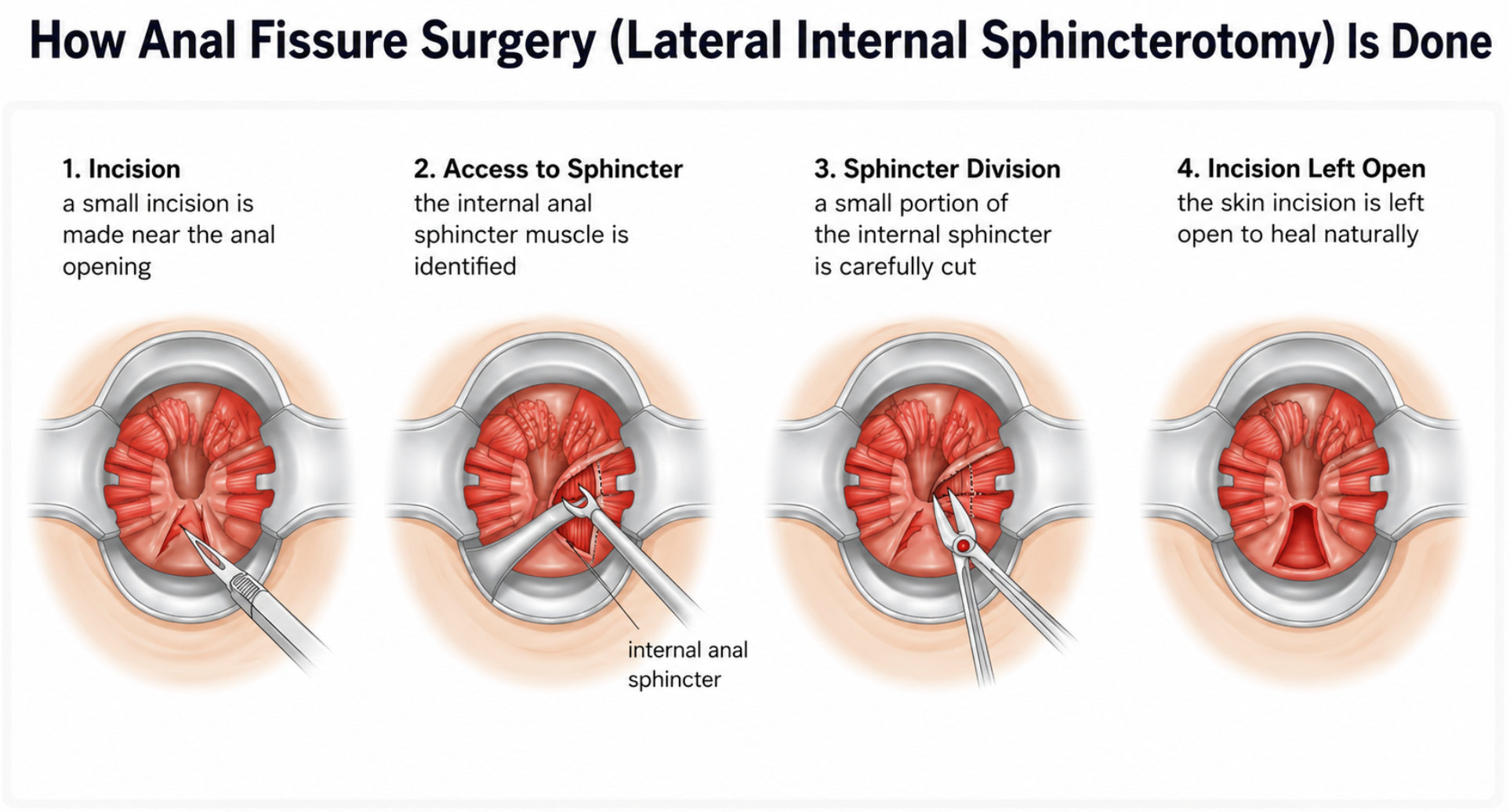
Treatment for anal fissures in Singapore follows a step-by-step approach, starting with simple measures and progressing if needed.
Dietary and lifestyle adjustments
For acute fissures, simple changes to bowel habits and diet are often the first line of management:
- Increase dietary fibre through vegetables, fruits, legumes, and whole grains to produce softer, bulkier stools that pass more easily
- Stay well hydrated to help soften stools and reduce strain
- Take warm sitz baths for 10 to 15 minutes after bowel movements to relax the anal sphincter muscle and improve circulation to the area
Medications
For fissures that do not resolve with lifestyle changes alone, medications are commonly prescribed to help it heal.
- Topical ointments such as glyceryl trinitrate (GTN) or diltiazem cream are applied directly to the anal area. They work by relaxing the muscle around the anal canal, which eases tightness and improves blood flow to the area. Both are prescription medications and should only be used under medical supervision. Your doctor will advise which option suits your situation and how to use it correctly.
- Stool softeners and laxatives prevent constipation and reduce the strain of bowel movements while the fissure heals.
- Painkillers may also be used in the short term to manage acute pain and break the cycle of pain-avoidance-constipation.
These treatments target both the symptoms and the underlying causes of delayed healing.
Injection-Based Treatments for Chronic Anal Fissures
For patients who are not ready for surgery, or those for whom surgery requires more careful consideration, non-surgical options like Botox injections may be explored first.
Injection of botulinum toxin into the muscle around the anal canal temporarily relaxes it, reducing tightness and improving blood supply to the fissure. The effect typically lasts three to four months, giving the fissure time to heal. Botox is generally less effective than surgery, and the fissure may return once the effect wears off. It is, however, a useful option for patients who wish to avoid or delay surgery, or who have specific reasons that make surgery less suitable for them.
When Is Surgery Recommended for Anal Fissures?
Surgery is considered for anal fissures that have not responded to conservative treatment, including lifestyle changes, topical medications, and injection-based therapies. It is not typically the first step, but for a subset of patients, it may offer more durable relief than non-surgical approaches alone.
Surgical treatment may be recommended when:
- The fissure has been present for more than six to eight weeks without improvement despite appropriate medical management
- Symptoms such as pain and bleeding are significantly affecting quality of life
- The fissure keeps recurring after periods of apparent healing
- The fissure shows signs that it is unlikely to heal on its own, such as thickened edges or a small skin tag at the opening
Your specialist will discuss all relevant treatment options with you before recommending surgery, ensuring you understand the expected outcomes and the reasons behind the recommendation.
Benefits of Early Anal Fissure Treatment
Anal fissures are often dismissed as minor complaints, but delaying treatment can allow an acute tear to develop into a chronic condition that is harder to manage. Seeking assessment early has practical benefits for how long recovery takes and whether surgery will ultimately be needed.
Treating a fissure early may help to:
- Improve the chance of healing with conservative measures alone, without needing medication or surgery
- Address pain before it creates a cycle of stool avoidance and worsening constipation
- Reduce the risk of the fissure becoming chronic, with associated structural changes that make healing more difficult
- Give medical therapies more time to work before surgical options need to be considered
Recovery After Anal Fissure Surgery
Recovery from anal fissure surgery is generally well tolerated. For patients who have undergone lateral internal sphincterotomy, most notice a significant reduction in pain within the first week or two. Knowing what to expect in the weeks following surgery helps with planning and ensures a smoother recovery.
In the First Few Days
Some discomfort, mild bleeding, and swelling around the surgical site in the days after the procedure are normal. Pain medication prescribed by your surgeon will help manage this. Keeping the area clean and dry is important to reduce the risk of infection.
Bowel Care
Maintaining soft, regular stools is a key part of recovery. Your surgeon will advise on stool softeners, dietary fibre, and fluid intake to ensure bowel movements remain easy and do not strain the healing site. Sitz baths can continue to provide relief and support healing in the early weeks.
Activity
Most patients are able to return to desk-based work and light daily activities within three to five days. Activities that put strain on the area, such as heavy lifting or sitting on hard surfaces for long periods, should be avoided for two to three weeks or as advised by your surgeon.
Healing Timeline
The fissure itself typically heals within four to eight weeks following surgery. Follow-up appointments allow your surgeon to monitor progress and address any concerns during recovery.
When to seek advice
Contact your surgeon promptly if you notice any of the following:
- Significant or increasing bleeding from the wound site
- Signs of infection, such as increasing redness, swelling, or discharge
- Difficulty passing urine
- Any unexpected changes to bowel control
Treatment Prognosis
The outlook for anal fissures treated appropriately is generally very good. Most acute fissures heal completely with simple measures, and chronic fissures that require more targeted treatment also have good long-term healing rates when managed correctly.
For most patients, a combination of medication and lifestyle changes is enough to achieve healing without surgery. Those who do require surgery generally respond well, with most experiencing lasting relief after the procedure.
Recurrence is possible, particularly in patients who return to the bowel habits or dietary patterns that contributed to the original fissure. The most effective ways to reduce this risk include:
- Maintaining adequate dietary fibre intake
- Staying well hydrated
- Responding promptly to early signs of constipation rather than waiting for symptoms to worsen
For patients with ongoing bowel conditions such as Crohn’s disease or long-term constipation, staying in touch with your specialist for continued support may be helpful. Regular follow-up means that any early signs of recurrence can be picked up and managed quickly.
Anal Fissure Surgery Cost in Singapore
The cost of anal fissure treatment in Singapore varies depending on a range of factors, and a personalised consultation is the best way to understand what applies to your specific situation.
Costs depend on:
- Public vs private setting: Subsidised rates in public hospitals are typically lower, while private care offers shorter waiting times and more personalised services.
- Complexity of the condition: Chronic or recurrent fissures may require more involved treatment.
- Surgeon’s expertise and facility fees: Professional fees, operating theatre charges, and anaesthesia all contribute to the total cost.
- Insurance coverage and claims: MediSave, MediShield Life, or private insurance may offset part of the cost.
A personalised consultation is necessary to provide an accurate estimate based on your condition, treatment approach, and coverage eligibility.
When to See a Colorectal Surgeon for Anal Fissures in Singapore
Early assessment helps prevent your condition from becoming chronic and allows you to explore appropriate treatment options tailored to your needs.
You should seek medical advice if you experience:
- Persistent or severe pain during bowel movements
- Recurrent anal fissure bleeding
- Symptoms lasting more than a few weeks
- No improvement with home treatment
Why Choose Advanced Colorectal and General Surgery
Advanced Colorectal and General Surgery is a private specialist clinic at Mount Alvernia Hospital, built around the practice of one surgeon, Dr Leong Quor Meng. Patients are seen, assessed, and treated by the same specialist from consultation through to follow-up, covering:
- Accurate diagnosis of anal fissures and related anorectal conditions, with a thorough examination to rule out other causes of symptoms
- Non-surgical and surgical management of both acute and chronic anal fissures, including lateral internal sphincterotomy where indicated
- Diagnostic colonoscopy and gastroscopy where further investigation is needed, with same-day appointments where clinically suitable
Treatment plans are developed individually around each patient’s symptoms, history, and overall health, with a clear explanation of the options and the reasoning behind the recommended approach.
About Dr Leong Quor Meng
Colorectal & General Surgeon in Singapore
Dr Leong is a general and colorectal surgeon in Singapore who graduated from the University of London in 2000. He obtained his membership with the Royal College of Surgeons of Edinburgh in 2003 and joined Tan Tock Seng Hospital in the same year. He began his Advanced Specialist Training in 2005 and passed his fellowship exams in 2008. In 2010, he was awarded the Ministry of Health HMDP scholarship to train under Professor Kim Seon Hahn at Korea University in laparoscopic and robotic colorectal surgery.
Dr Leong manages a full range of anal and colorectal conditions, including acute and chronic anal fissures, haemorrhoids, anal fistulas, and colorectal cancer. For patients with anal fissures requiring surgery, he performs lateral internal sphincterotomy as a day procedure, alongside other minimally invasive techniques including Single Incision Laparoscopic Surgery. He is also an experienced endoscopist with more than 10,000 diagnostic and therapeutic procedures, and is able to offer colonoscopy where further investigation is needed alongside fissure treatment.
He also trains basic and advanced specialist trainees in laparoscopic surgery and proctors consultant surgeons in complex colorectal cases.

Frequently Asked Questions About Anal Fissures
What are the standard treatments for anal fissures?
Standard treatments in Singapore for anal fissures include topical ointments containing nitroglycerin or calcium channel blockers to relax the anal sphincter. Changing your diet by increasing fibre intake and drinking more water can help soften stools.
Medications like painkillers and stool softeners manage pain and prevent constipation. Sitz baths, warm baths to relax the anal muscles, are also commonly recommended.
How does treatment for chronic anal fissures differ from acute fissures?
In Singapore, treatment for chronic anal fissures may involve more intensive measures compared to acute fissures. Other measures can include Botox injections to relax the anal sphincter muscles or surgical procedures like lateral internal sphincterotomy to relieve pressure on the fissure.
Long-term use of medications, both topical and oral, may also be prescribed to control pain and promote healing.
How do I prepare for anal fissure surgery?
Preparing for anal fissure surgery typically involves consulting with your surgeon in Singapore to discuss the procedure, its risks, and benefits. A medical evaluation ensures you are in good health for surgery.
You will need to follow pre-operative instructions provided by your healthcare team, which may include fasting before anal fissure surgery and discontinuing certain medications as advised.
Does anal fissure surgery include post-operative care?
Post-operative care is an important part of recovery and your surgeon will outline what is included in your treatment process. This typically covers follow-up consultations to monitor healing, advice on wound care, dietary guidance to maintain soft stools, and prescription of any necessary medications. It is advisable to clarify the specifics of what is covered at the time of your consultation so that you have a clear understanding of all expected costs.
What affects the cost of anal fissure surgery in Singapore?
Several factors influence the overall cost, including whether treatment takes place in a public or private setting, the complexity of your condition, the type of procedure performed, anaesthesia and facility fees, and the extent of post-operative care required. Insurance coverage through MediSave, MediShield Life, or private integrated shield plans may offset a significant portion of the cost. A consultation with Dr Leong will allow for a more accurate estimate based on your individual circumstances.
What should I do if my anal fissure starts bleeding?
If your anal fissure starts bleeding, take immediate steps to manage it. Gently apply pressure with clean gauze to the area to stop the bleeding. Avoid straining during bowel movements and take steps to prevent constipation.
If bleeding persists or if you experience excessive bleeding, seek medical advice promptly from your healthcare provider.
What are the risks associated with bleeding anal fissures?
Bleeding anal fissures can pose several risks, including anaemia due to chronic blood loss. There is also a risk of infection, especially if the area becomes irritated or contaminated.
Persistent bleeding may indicate that the fissure is not healing properly, potentially leading to chronic issues or complications. Monitoring anal fissure bleeding closely and consulting a healthcare professional in Singapore for appropriate evaluation and management is essential.
How long does recovery take after lateral internal sphincterotomy?
Most patients notice a significant reduction in pain within one to two weeks of surgery. The fissure itself typically heals over four to eight weeks. Light activities and desk-based work can generally be resumed within a few days. Strenuous activity and heavy lifting should be avoided for two to three weeks, or as advised by your surgeon. Follow-up appointments allow your surgeon to confirm that healing is progressing as expected.
Can anal fissures heal without surgery?
Yes, many anal fissures do heal without surgery. Acute fissures often resolve with conservative management including dietary changes, sitz baths, and topical medications. Surgery is reserved for fissures that have not responded to these treatments, and the decision to proceed is made collaboratively between you and your specialist.
When should I see an anal fissure specialist in Singapore?
You should visit a colorectal clinic if you experience any of the following:
- Anal pain or bleeding during bowel movements that has persisted for more than two to three weeks
- Symptoms that have not improved with home treatment
- Difficulty passing stool due to pain, or worsening constipation as a result of avoidance
- A history of recurring fissures
Any rectal bleeding that has not been previously evaluated by a doctor should also be assessed, particularly if you are aged 40 or above or have a family history of bowel conditions. Early assessment helps prevent an acute fissure from becoming chronic and gives you access to targeted treatment sooner.
About Dr Leong Quor Meng
Colorectal & Hernia Surgeon in Singapore
Dr Leong is a general and colorectal surgeon in Singapore who graduated from the University of London in 2000. He obtained his membership to the Royal College of Surgeons of Edinburgh in 2003 and started working in Tan Tock Seng Hospital in 2003. He started his Advanced Specialist Training in 2005 and passed his fellowship exams in 2008. Dr Leong was awarded the prestigious MOH HMDP scholarship to train under Prof Kim Seon Hahn in Korea University for Laparoscopic and Robotic colorectal surgery in 2010.
Dr Leong is amongst a handful of hernia and colorectal surgeons in Singapore who practice Single Incision Laparoscopic surgery. This is a technical and complex procedure that is minimally invasive, speeds up recovery, and confers excellent cosmetic results. Dr Leong also routinely trains basic and advanced specialist trainees in laparoscopic surgery, and regularly proctors consultant surgeons in complex colorectal cases.
Beyond laparoscopic surgery, Dr Leong also performs a repertoire of minimally invasive General Surgery procedures. He is also an experienced endoscopist with more than 10000 procedures, performing diagnostic and therapeutic scopes for elective and emergency surgical conditions. He performs direct access colonoscopies and oesophago-gastro-duodenoscopy for patients and will strive to perform the procedures on the same day if possible for patients’ convenience.
Insurance
Our surgery is on the panel of most of the major insurance companies and if you are covered by corporate insurance, you may be entitled to a cashless visit to our clinic.
Get In Touch
Corporate Insurance Partners


Personal Insurance Partners