Gallbladder Surgery/Removal in Singapore | Costs & Procedure
Insurance
Our surgery is on the panel of most of the major insurance companies and if you are covered by corporate insurance, you may be entitled to a cashless visit to our clinic.
Get In Touch
Introduction
Gallstones are a common digestive condition, affecting an estimated one in ten adults. For many people, they cause no symptoms at all and may never need treatment. For others, gallstones can lead to recurring pain and, occasionally, more serious complications that do warrant medical care.
When gallstones become symptomatic, removing the gallbladder is the usual treatment. This is most commonly done through laparoscopic gallbladder surgery, also known as a laparoscopic cholecystectomy, where the gallbladder is removed through several small incisions rather than one large cut. Compared with traditional open surgery, this minimally invasive approach is generally associated with less post-operative pain and a quicker recovery.
This page explains what gallstones are, how they form, when they need treatment, and what to expect from gallbladder surgery and recovery in Singapore.
What Are Gallstones (Gallbladder Stones)?

Gallstones are hardened deposits of digestive fluid that form in the gallbladder, a small organ that’s found under your liver. Its main function is to store and release bile, a fluid that helps the body digest fats.
Gallstones can vary widely in size, from as small as a grain of sand to as large as a golf ball. Some people may develop just one gallstone throughout their lives, while others may develop multiple at the same time.
Generally, gallstones exhibit no symptoms, thus many people go about their lives not requiring gallstone or gallbladder surgery in Singapore.
However, if a gallstone becomes trapped in an opening (duct) inside the gallbladder, it can trigger a sudden, intense pain in your abdomen. This pain usually lasts between one and five hours and is known as biliary colic. It typically starts in the area above the navel, can spread to the back, and often comes on after a heavy or fatty meal. Because of where it occurs, this pain is sometimes mistaken for gastric discomfort.
Some people with gallstones can also develop complications, such as inflammation of the gallbladder (cholecystitis). This can cause persistent pain, jaundice (yellow skin) and a fever. In such cases, surgery in Singapore to remove the gallbladder is usually recommended.
Understanding The Importance Of Your Gallbladder
The gallbladder is a small pear-shaped organ found underneath the liver. Its main purpose is to store and concentrate bile.
Bile is a yellow liquid produced by the liver to help digest fats. It’s passed from the liver into the gallbladder through ducts known as bile ducts.
Between meals, bile is stored in the gallbladder, where it becomes more concentrated, particularly during fasting. When you eat, the body detects the presence of fats and signals the gallbladder to release bile into the digestive system, where it helps break down fats and oils.
While the gallbladder supports digestion, it is not an organ the body depends on to function. After it is removed, the liver continues to produce bile, which is delivered directly into the small intestine.
Causes Of Gallstones
Gallstones are thought to develop because of an imbalance in the chemical make-up of bile inside the gallbladder.
In most cases, the levels of cholesterol in bile become too high and the excess cholesterol forms into stones. There is some evidence that a previous infection of the gallbladder may contribute to their formation.
Gallstones are very common. It’s estimated more than 1 in every 10 adults has gallstones, although a minority of people develop symptoms. Several factors are associated with a higher likelihood of developing gallstones, including:
- Individuals above the age of 40
- Obesity
- A diet high in fat and refined carbohydrates
- Rapid weight loss recently
- A family history of gallstones
- Pregnancy
Symptoms & Complications of Gallstones
Many people with gallstones have no symptoms at all. When symptoms do occur, they commonly include:
- Sudden pain in the upper right or central abdomen, often after eating
- Pain that spreads to the back or right shoulder
- Nausea or vomiting
- Bloating and indigestion
- Discomfort after fatty or rich meals
In some cases, a gallstone can block a bile duct and lead to complications. These include:
- Cholecystitis (gallbladder inflammation): Ongoing pain, tenderness, and fever.
- Jaundice: Yellowing of the skin and the whites of the eyes, caused by bile being unable to drain normally.
- Cholangitis (bile duct infection): Fever, jaundice, and abdominal pain occurring together.
- Gallstone pancreatitis: Inflammation of the pancreas, which can occur if a stone blocks the duct shared with the pancreas.
If you experience severe or persistent abdominal pain, a high fever, or yellowing of the skin or eyes, it is advisable to seek medical attention promptly, as these may indicate a complication that needs timely care.
How Gallstones Are Diagnosed
If gallstones are suspected, your doctor will usually begin by discussing your symptoms and medical history, followed by a physical examination to check for tenderness in the upper abdomen.
The main test used to confirm gallstones is an abdominal ultrasound. This is a non-invasive scan that does not involve radiation and is generally reliable for detecting gallstones and signs of gallbladder inflammation.
Blood tests may also be carried out to assess how well the liver is functioning, check for signs of infection, and evaluate the pancreas where needed.
In some cases, further imaging may be recommended to get a clearer picture, particularly if a stone is suspected in the bile ducts. These may include an MRI scan of the bile ducts (known as an MRCP) or other specialised investigations. Your doctor will explain whether any additional tests are needed based on your individual situation.
Common Treatments For Gallstones
Treatment is usually only necessary if gallstones are causing problems. For people who have gallstones but no symptoms, active treatment is often not required, and a doctor may simply recommend monitoring.
Treatment is generally considered when gallstones are causing:
- Symptoms such as recurring abdominal pain
- Complications such as jaundice, acute pancreatitis or infection(cholecystitis)
In these cases, keyhole surgery to remove the gallbladder may be recommended. This procedure, known as a laparoscopic cholecystectomy, is a well-established operation with a low risk of complications. Your doctor will discuss whether surgery is appropriate for you and what it involves.
Laparoscopic Gallbladder Surgery in Singapore
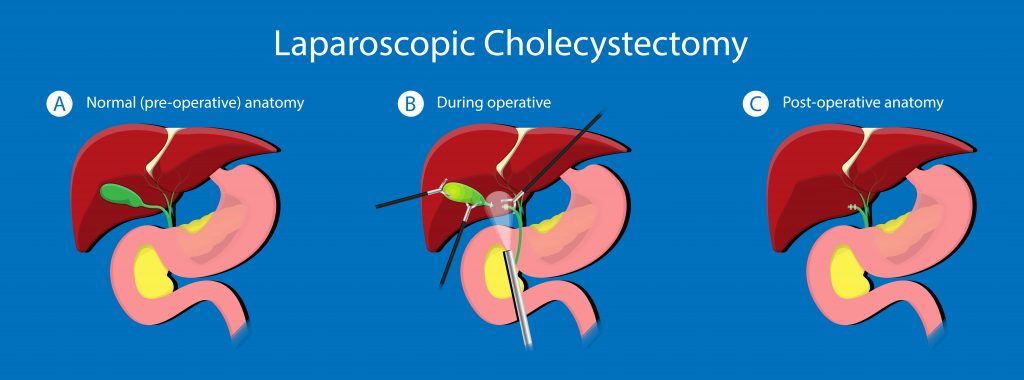
A laparoscopic cholecystectomy is a minimally invasive operation to remove the gallbladder. Rather than a single large incision, the surgeon makes a few small cuts in the abdomen. A thin tube with a camera, called a laparoscope, is inserted through one of these openings, allowing the surgeon to view the gallbladder on a screen and remove it using fine surgical instruments.
Because the incisions are small, this approach is generally associated with several practical benefits compared with traditional open surgery, including:
- Less post-operative pain
- A shorter hospital stay
- Smaller scars
- A faster return to everyday activities
Many patients are able to go home within a day or two, though the exact length of stay depends on individual circumstances and how the body responds to surgery. In a small number of cases, an operation that begins laparoscopically may need to be converted to open surgery for safety reasons, which the surgeon will explain beforehand.
Benefits of Early Gallstones Treatment
When gallstones are causing recurring symptoms, addressing them in a timely manner can help reduce the chance of complications developing later, such as gallbladder infection, severe inflammation, or pancreatitis.
Treating symptomatic gallstones on a planned, elective basis also tends to be more straightforward than managing an acute attack, which may require emergency care. Discussing your symptoms with a doctor early allows you to understand your options and plan treatment at a time that suits you.
That said, not all gallstones need to be treated. Whether and when to proceed with surgery is a decision best made together with your doctor, based on your symptoms, your overall health, and your individual circumstances.
What Happens After I Remove The Gallbladder
It’s possible to lead a normal life without a gallbladder.
Your liver will still produce bile to digest food, but instead of being stored in the gallbladder, the bile is held in the bile ducts before being released into the small intestine after a meal.
We usually advise patients to avoid very oily foods for around six months after surgery, as the bile stored in the bile ducts may not be enough to digest a particularly fatty meal during this period. Over time, the bile ducts gradually expand and are able to hold more bile. After about six months, most patients find they can return to a normal diet.
Recovery After Gallbladder Surgery
Recovery after a laparoscopic gallbladder removal is generally quicker than after open surgery, though it varies from person to person.
Timeline: Many patients return home within one to two days and resume light daily activities within a week or so. A return to more strenuous activity or heavy lifting usually takes a few weeks.
Pain management: Some discomfort around the small incisions is normal in the first few days and is usually well managed with prescribed pain relief. You may also feel temporary shoulder discomfort, which is a common after-effect of the gas used during keyhole surgery and tends to settle on its own.
Wound care: The small incisions are typically closed with dissolvable stitches or surgical dressings. Your care team will give you specific instructions on keeping the wounds clean and dry and on when you can shower.
Returning to work: Many people are able to return to office-based work within one to two weeks, depending on the nature of their job and how they feel. Your doctor can advise based on your recovery.
Diet: It is generally best to start with lighter, low-fat meals and gradually reintroduce other foods. As noted above, very oily foods are best limited for around six months.
Follow-up: A follow-up appointment is usually arranged to check your recovery and review the results of any tissue sent for testing. Always contact your doctor if you develop fever, worsening pain, persistent vomiting, or yellowing of the skin or eyes after surgery.
Gallbladder Surgery Cost in Singapore
The cost of gallbladder surgery in Singapore can vary depending on a number of factors, including:
- The type of hospital or facility where the surgery is performed
- The complexity of the procedure and whether complications are present
- Pre-operative investigations such as scans and blood tests
- The length of the hospital stay
For many patients, medical insurance or MediSave may help to cover part of the cost. Coverage differs between policies, so it is worth checking the details of your own plan.
Our surgery is on the panel of most major insurance companies, and patients with corporate insurance may be eligible for a cashless visit. For a clearer estimate based on your specific situation, please get in touch with our clinic.
When to See a Gallstones Specialist in Singapore
It is worth consulting a specialist if you experience any of the following:
- Recurring or severe abdominal pain, particularly after meals
- Repeated episodes of pain that you suspect may be related to gallstones
- Persistent bloating, nausea, or indigestion
- Yellowing of the skin or eyes (jaundice)
- Fever accompanied by abdominal pain
These symptoms do not always mean surgery is needed, but they are worth having assessed. A specialist can confirm whether gallstones are the cause, explain your options, and recommend an appropriate course of action. If you have had a gallstone attack before, an early review can help you understand the likelihood of further episodes.
Why Choose Advanced Colorectal and General Surgery
Gallstone disease is usually treated effectively with surgery, and choosing an experienced surgical team can help you feel informed and supported throughout the process.
Dr Leong Quor Meng is an experienced general and colorectal surgeon in Singapore with a focus on laparoscopic and minimally invasive surgery, including gallbladder removal. Patients are assessed individually, with the diagnosis and recommended treatment explained clearly so that you can make a decision that is right for you.
We are committed to providing attentive, patient-centred care from consultation through to recovery. If you would like to find out more about gallbladder surgery or the cost of gallstone removal in Singapore, please call us or send us a message.
About Dr Leong Quor Meng
Colorectal & Hernia Surgeon in Singapore
Dr Leong is a general and colorectal surgeon in Singapore who graduated from the University of London in 2000. He obtained his membership to the Royal College of Surgeons of Edinburgh in 2003 and began working at Tan Tock Seng Hospital that same year. He commenced his Advanced Specialist Training in 2005 and passed his fellowship examinations in 2008. In 2010, Dr Leong was awarded the MOH HMDP scholarship to train under Prof Kim Seon Hahn at Korea University in laparoscopic and robotic colorectal surgery.
Dr Leong is among a small number of hernia and colorectal surgeons in Singapore who practise Single Incision Laparoscopic surgery. This is a technically complex, minimally invasive procedure that can support faster recovery and good cosmetic results. He also routinely trains basic and advanced specialist trainees in laparoscopic surgery and proctors consultant surgeons in complex colorectal cases.
Beyond laparoscopic surgery, Dr Leong performs a range of minimally invasive general surgery procedures. He is an experienced endoscopist with more than 10,000 procedures, performing diagnostic and therapeutic scopes for both elective and emergency conditions. He carries out direct access colonoscopy screenings and oesophago-gastro-duodenoscopy, and aims to perform these on the same day where possible for patients’ convenience.

Frequently Asked Questions About Gallbladder Removal Surgery In Singapore
Are there any side effects after gallbladder removal in Singapore?
Contrary to many rumours about gallbladder removal shortening life expectancy. It actually ‘force’ an individual who has undergone surgical removal to make healthier choices. You will be restricted to a limited amount of food as your body will have to adjust to not having a gallbladder. This is a piece of good news as you will be taking in foods with more fibre, which benefits your health in the long term. You are also more likely to lose some weight because of the need to avoid very oily food in the first six months after surgery.
How much does gallstones removal surgery cost in Singapore?
The general breakdown for gallstones removal surgery cost in Singapore is as follows. The procedure itself ranges from $5000 to $8000, (based on MOH fee guidelines), depending on the severity of the individual. Depending on the individual’s medical insurance coverage, the total cost might differ as well. Contact us to find out more.
Is gallbladder removal necessary for all gallstones?
No. Many people have gallstones that cause no symptoms and may never need treatment. Surgery is usually recommended when gallstones cause recurring pain or complications such as inflammation, infection, or pancreatitis. If you have no symptoms, your doctor may simply suggest monitoring. The decision is made on an individual basis after assessing your symptoms and overall health.
Can gallstones return after surgery?
Once the gallbladder is removed, gallstones cannot form in it again, because the organ where they develop is no longer there. In rare cases, stones can form in the bile ducts after surgery, but this is uncommon. Removing the gallbladder is the reason this surgery offers a lasting solution for gallstone disease, rather than only addressing the stones themselves.
Can only the gallstones be removed without removing the gallbladder?
In most cases, no. The main reason gallstones develop is an underlying problem with the gallbladder itself. Removing only the stones and leaving the gallbladder in place tends to result in new stones forming, which would require further surgery. A second operation is often more complex because of scar tissue from the first. For this reason, both the gallbladder and the stones are removed together.
What foods should I avoid after gallbladder surgery?
In the first six months after surgery, it is best to limit very oily and fatty foods, as the bile ducts may not yet be able to store enough bile to digest a heavy, oily meal comfortably. Eating something too rich during this period may lead to temporary indigestion or loose stools, but it is not dangerous. Over time, the bile ducts adjust, and most patients are able to return to a normal, balanced diet.
Insurance
Our surgery is on the panel of most of the major insurance companies and if you are covered by corporate insurance, you may be entitled to a cashless visit to our clinic.
Get In Touch
Corporate Insurance Partners


Personal Insurance Partners